
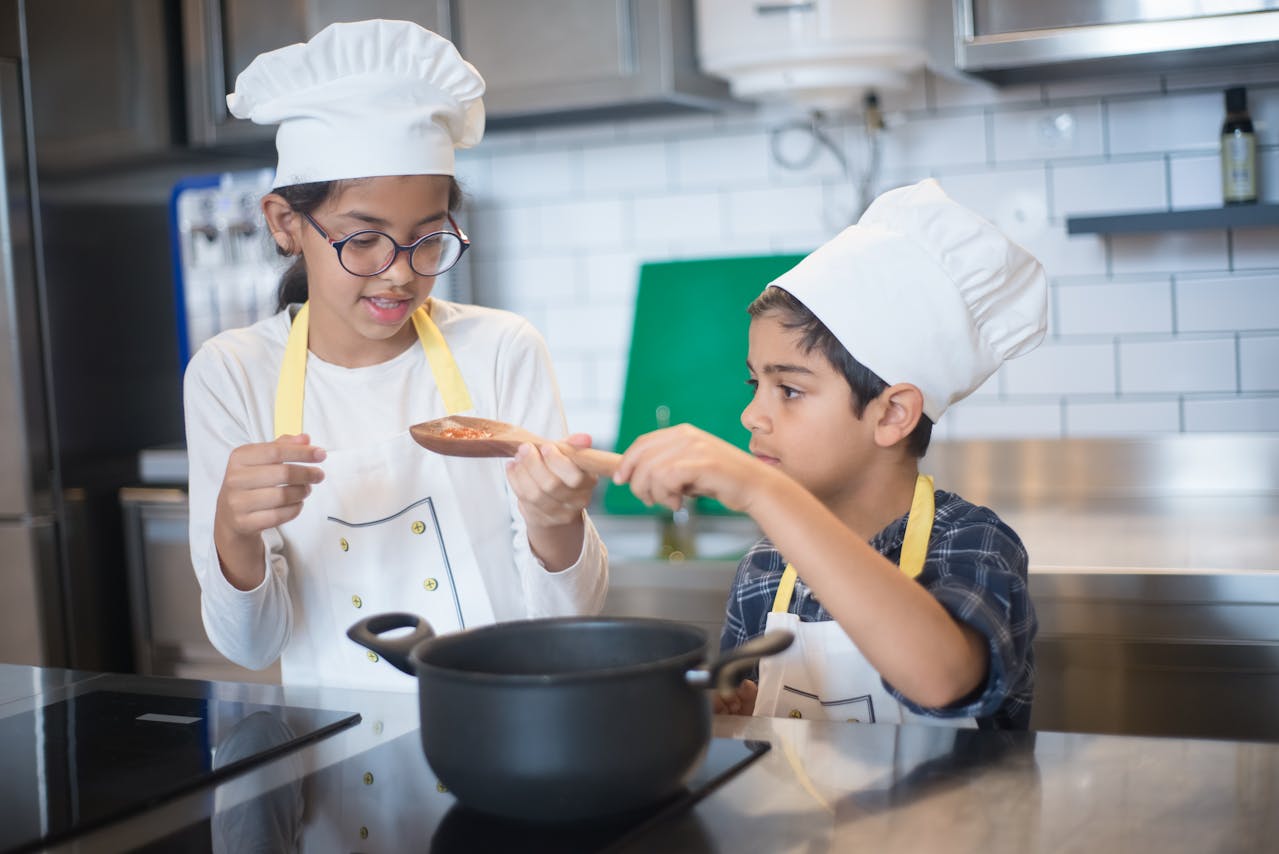
For parents and nannies, food is part of the daily routine — breakfast before school, lunch breaks, afternoon snacks, and dinner prep. But beyond nutrition, food can also be a powerful tool for children's hands-on learning, creativity, and education.
When used intentionally, cooking and food-based activities can support early literacy, math skills, science exploration, fine motor development, and cultural awareness — all while keeping children engaged.
Below are practical, age-appropriate ways to turn food into meaningful learning experiences at home.
1. Build Math Skills in the Kitchen
The kitchen is a natural math lab.
For toddlers and preschoolers:
- Count grapes or crackers onto a plate
- Sort foods by color, shape, or size
- Compare “more” vs. “less” during snack time
For school-age children:
- Practice measuring cups and teaspoons
- Double or halve a recipe
- Estimate cook times
- Calculate how many cookies each person gets
These simple activities reinforce number sense, fractions, sequencing, and problem-solving — without a worksheet in sight.
2. Explore Science Through Cooking
Cooking is chemistry in action.
Try experiments like:
- Mixing baking soda and vinegar
- Watching dough rise with yeast
- Making homemade butter by shaking heavy cream
- Freezing juice to observe liquid-to-solid changes
Talk about:
- Why heat changes food
- How ingredients combine
- What happens when water evaporates
Children learn best when they can see, touch, and experiment — and the kitchen makes science tangible.
3. Strengthen Literacy and Communication
Food-based activities naturally support reading and language development.
- Read recipes together
- Write grocery lists
- Label containers
- Describe textures, flavors, and smells
Encourage children to:
- Retell the steps of a recipe
- Create their own “cookbook”
- Invent names for dishes
This builds vocabulary, sequencing skills, and confidence in communication.
4. Encourage Cultural Awareness
Food opens the door to meaningful conversations about culture and tradition.
Choose a country each week and:
- Cook a traditional dish
- Locate the country on a map
- Learn a greeting in that language
- Discuss customs and celebrations
For nannies, this can be especially enriching if you share dishes from your own heritage. For parents, it’s a simple way to introduce global awareness at home.
5. Develop Fine Motor and Life Skills
Food prep supports independence and coordination.
Children can:
- Spread peanut butter
- Peel bananas or clementines
- Stir batter
- Pour water
- Assemble fruit kabobs
These tasks strengthen hand muscles, coordination, and confidence. Over time, children learn responsibility and practical life skills they’ll use for years.
6. Turn Snack Time Into Creative Play
Food can double as art.
- Create fruit animals
- Make vegetable “faces”
- Design rainbow plates
- Decorate yogurt with colorful toppings
Encourage creativity while also modeling healthy choices. You can even introduce gentle lessons about balanced meals by including multiple food groups.
Safety and Boundaries Matter
While food-based activities are valuable, supervision is essential:
- Follow allergy guidelines
- Wash hands before handling food
- Use age-appropriate utensils
- Keep hot surfaces and sharp tools supervised
For nannies, align with the parents’ food rules and dietary preferences. For parents, communicate expectations clearly so everyone feels confident.
The Bigger Picture
Using food for activities isn’t about elaborate projects. It’s about slowing down everyday moments and turning them into opportunities for connection and growth.
Cooking together builds:
- Confidence
- Patience
- Teamwork
- Responsibility
- Healthy relationships with food
For parents and nannies alike, the kitchen can become more than a place to prepare meals — it can become a classroom, a science lab, and a creative studio all at once.
And the best part? Everyone gets to enjoy the results together.
Hire Your Nanny from A New England Nanny
If you want a nanny that will get your kids to play with their food, we can help! Our professional, experienced, thoroughly screened caregivers have been providing peace of mind to Capital Region families for more than 34 years.
If you need full- or part-time care, or just occasional babysitting, after-school care, housekeeping, or anything else in your home, let us know how we can help.
Request a service or give us a call at (518) 348-0400 and we’ll provide a free consultation to get you the care you need.